The Upside-Down Belly Fold Tuck
Trail Log · Movement Breakdown
The reverse crunch is exactly what it sounds like — instead of curling your upper body toward your knees like in a regular crunch, you curl your lower body toward your chest. It's the crunch that got flipped, and it targets the lower portion of your abdominals with a precision that regular crunches can only dream about.
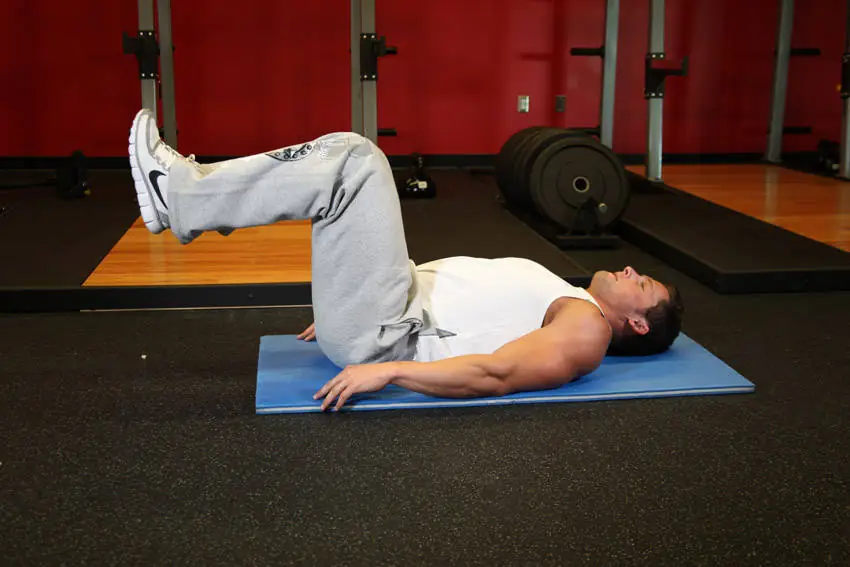
You lie on the floor with your legs extended and your arms resting at your sides, palms down on the ground for support. Your arms don't move during this exercise — they're just there for stability, like training wheels on a bicycle. You lift your legs so your thighs are perpendicular to the floor and your feet are together and parallel to the ground, creating an L-shape with your lower body. This is your launch position.
Now here's the movement: you rotate your pelvis backward and lift your hips off the floor, drawing your knees toward your chest until they touch. It's a small, controlled motion that originates from your lower abs, not from swinging your legs or using momentum. Hold the contraction at the top for a second — really feel those lower abdominals firing — and then lower your legs back to the starting position with control.
The reverse crunch is particularly effective because it works the lower abs through their primary function of posterior pelvic tilt, which is a fancy way of saying it does exactly what those muscles are designed to do. It's also much easier on your neck than regular crunches, since your head never leaves the floor. Do enough of these and that stubborn lower belly area will start cooperating with the rest of your midsection.