The Suspended Ring Descent and Rise
Trail Log · Movement Breakdown
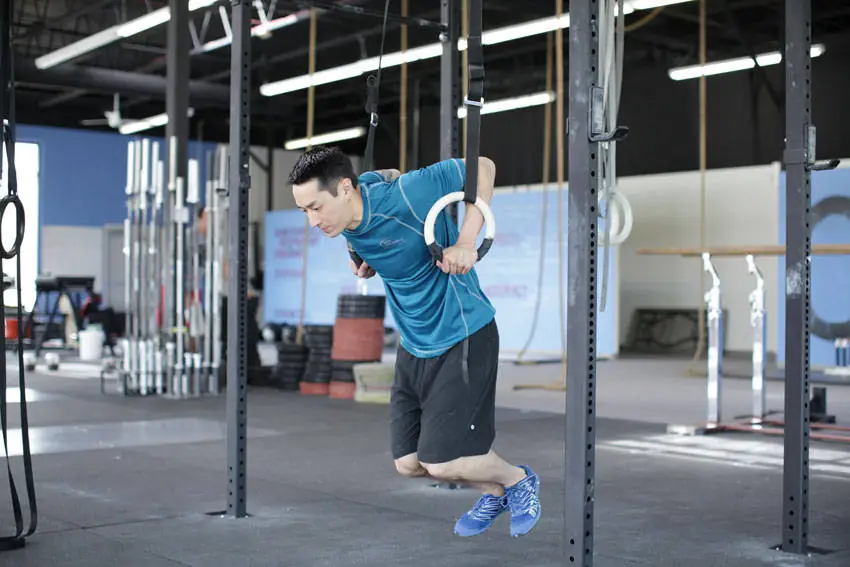
Ring dips take the already challenging parallel bar dip and add a layer of instability that makes the exercise significantly more demanding and significantly more rewarding. Instead of rigid bars, your hands are gripping gymnastic rings that can move in any direction — forward, backward, inward, outward — which means your shoulders and core have to stabilize every inch of every rep.
You grab a ring in each hand and give a little hop to reach the starting position with your arms locked. Just holding yourself up on rings requires active shoulder stability, because the rings want to drift apart and your body wants to rotate. From this shaky starting point, you bend your elbows and lower yourself until your upper arms reach about parallel to the floor, fighting the rings' attempts to wobble you out of position.
You reverse the movement by pressing yourself back up to locked arms, and every step of the way, your stabilizers are working overtime to keep the rings from drifting. It's like doing dips on a surface that's actively trying to sabotage you, and that's exactly what makes ring dips so valuable. They build the kind of shoulder stability and control that transfers directly to gymnastics, climbing, and any sport where your arms need to produce force in unstable positions. Avoid rocking and maintain clean posture throughout, because the rings will expose any weakness in your form immediately. There's nowhere to hide on the rings — either you're strong enough or you're not.