The Sit-and-Glide Water Oar Odyssey
Trail Log · Movement Breakdown
Stationary rowing is the cardio exercise for people who want all the benefits of running without any of the impact, and who also enjoy the sensation of repeatedly pulling an invisible oar through an invisible river. The rowing machine — or 'erg' as the cool kids call it — is one of the most efficient full-body cardio devices ever invented, and it deserves way more attention than it typically gets in most gyms.
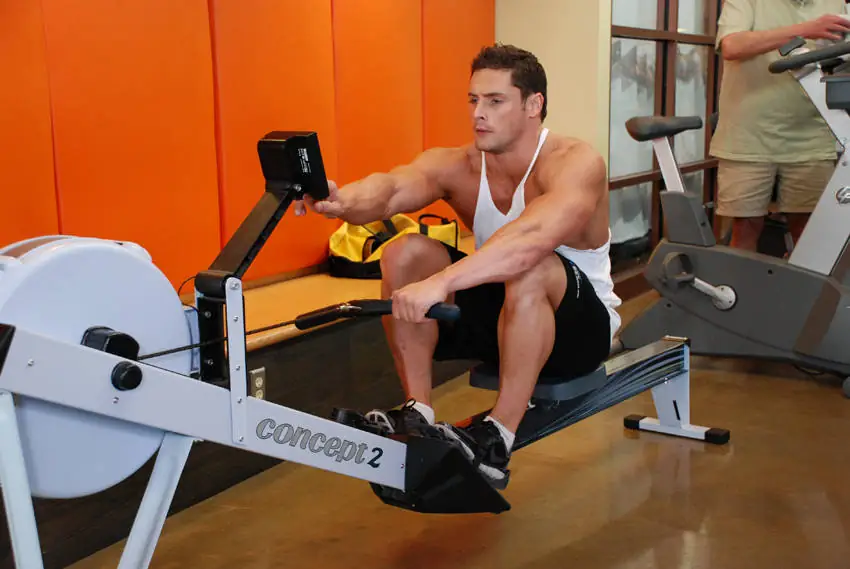
You sit on the seat, secure your heels against the foot pads, and set your desired program. Sit up tall and lean forward slightly at the hips — this is your starting position, and you look like a very determined person about to commandeer a small boat. The drive phase is where the work happens: you push forcefully with your legs, lean back slightly at the hips, and pull the handle to your upper abdomen, squeezing your shoulder blades together. It's a coordinated sequence of legs, then hips, then arms — in that order, always that order.
The recovery phase reverses the sequence: arms extend, torso leans forward, knees bend, and you glide back to the starting position. The key is using your legs and hips as the primary engines while your arms and back are along for the ride — pulling too hard with your arms is the most common beginner mistake, and it's a fast track to a tired lower back. Rowing builds cardiovascular endurance, back strength, and leg power simultaneously, which is a rare combination for a cardio machine. It's the total-body cardio option that leaves nothing unworked.