The Seated Barbell Waist Waggle
Trail Log · Movement Breakdown
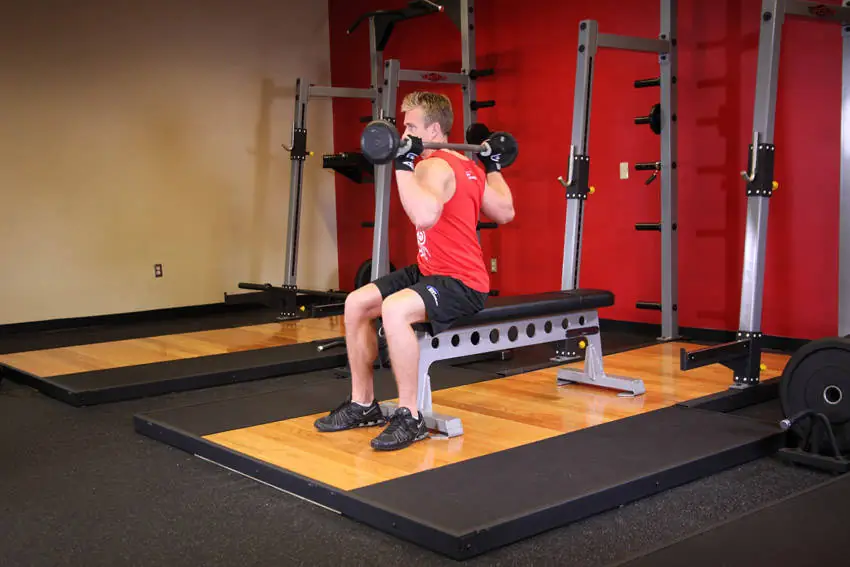
Here's an exercise that looks like you're trying to be a human metronome while balancing a barbell on your shoulders. The seated barbell twist has you sitting on the end of a flat bench with a barbell positioned at the base of your neck, twisting your torso from side to side to work your obliques and core rotators.
You sit at the end of the bench with your feet shoulder-width apart, grab the bar with an overhand grip wider than your shoulders, and press it overhead. Then you lower the bar behind your head until it rests along the base of your neck — the same position you'd use for back squats, except you're sitting down and about to do something very different with it. This is your starting position, and from here, you rotate your waist from side to side.
The movement should come exclusively from your torso — your feet stay planted, your head stays facing forward (or turning naturally with the twist), and your hips stay anchored to the bench. Twist only as far as your waist comfortably allows, because forcing extra range of motion in a loaded rotational exercise is the kind of decision that leads to conversations with orthopedic surgeons. Move slowly and controlled, exhaling as you rotate and inhaling as you return to center.
This exercise builds rotational core strength and oblique endurance, but it's somewhat controversial because the loaded twist can stress the spinal discs if done improperly. Keep the weight moderate, the movement controlled, and the range of motion within your natural flexibility, and you'll build a stronger, more resilient midsection that can handle whatever rotational demands life throws at it.