The Rickshaw Ground-Up Heave
Trail Log · Movement Breakdown
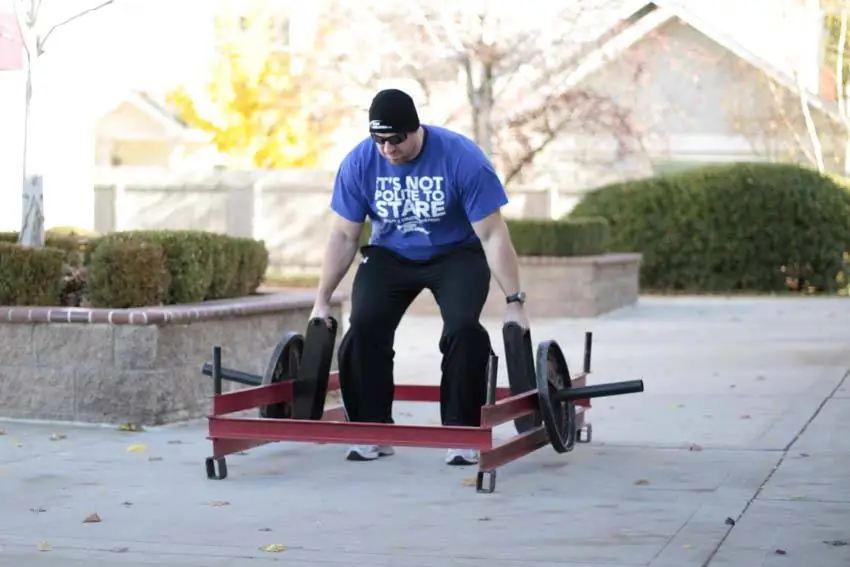
The rickshaw deadlift takes that strange strongman frame with its downward-pointing handles and applies a conventional deadlift pattern to it. It's like a regular deadlift that went to a different school and came back with a new personality — the mechanics are familiar, but the grip and leverage are completely different, which means your body has to adapt in ways that a barbell deadlift never demands.
You load the frame with your desired weight and center yourself between the handles, feet about hip-width apart. Bend at the hips to grab the handles, letting your shoulder blades extend and your arms hang long. Take a deep breath, drop your hips, bend your knees, and set your gaze forward with your chest up and back arched. You're in the classic deadlift setup position, but the handles are positioned differently than a barbell would be, which changes the leverages throughout the movement.
Drive through your heels to lift the weight, keeping the frame close to your body. As the weight rises, squeeze your shoulder blades together and drive your hips forward to lock out at the top. Then lower the weight by hinging at the hips and guiding it back to the floor with control. The rickshaw deadlift builds raw hip and leg power along with grip strength that's specific to the handle orientation — which, in strongman competition, is the exact orientation you'll face. Even if you're not competing, the variety of grip angles challenges your body in new ways that prevent adaptation and keep your training fresh.