The Push-and-Twist Side Show
Trail Log · Movement Breakdown
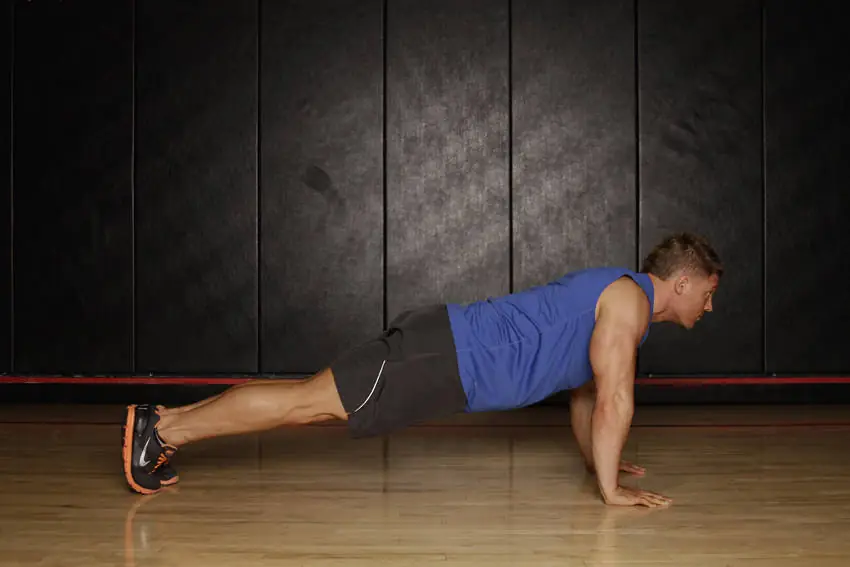
Here's a fun one: do a push-up, and then at the top, instead of just staying there like a boring person, you rotate your entire body to one side and reach one arm toward the ceiling. You've just turned a push-up into a side plank, and your core is absolutely furious about the bait-and-switch.
You start in a push-up position with your hands just outside shoulder width. You perform a standard push-up — elbows bend, chest drops, body stays straight — and then as you press back up, you shift your weight onto one hand and rotate your torso, raising the opposite arm toward the sky. For a beautiful moment, you're in a side plank position, one hand on the ground, the other reaching for the heavens, body straight as a plank, looking like a very sweaty yoga statue.
Then you lower that raised arm back to the floor, do another push-up, and rotate to the other side. It's push-up, twist, push-up, twist — a rhythmic alternation that works your chest, shoulders, triceps, and obliques in one continuously flowing sequence. The rotation element is what sets this apart from a standard push-up; it forces your core to stabilize against rotational forces while also producing rotation, which is essentially asking your midsection to be strong in every possible direction. Alternate sides for ten or more reps and you'll feel like you've done an entire core workout inside your push-up workout, which — let's be honest — you basically have.
Adjacent Trails · Same Axis
 Read 7/7 · series
The Kettlebell Leapfrog Fiasco
 The Explosive Floor-Breaking Bounce
So you've mastered regular push-ups and you're thinking, 'These are fine, but I wish they were more…
 Read 7/7 · series
The Grand Span Pector Plank Dive
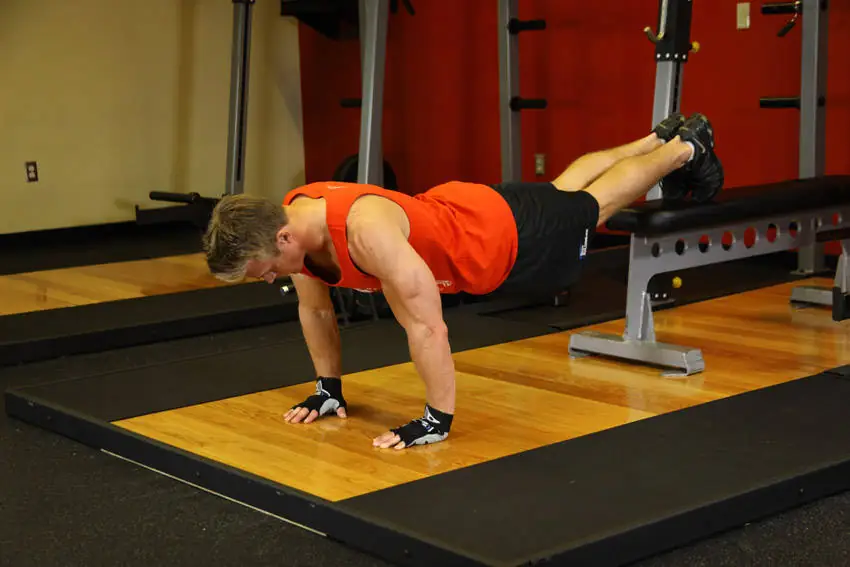 The Sky-Feet Pectoral Plunge
So you thought regular push-ups were challenging enough? How about we elevate your feet on a bench…