The Banded Rack Iron Uprooting
Trail Log · Movement Breakdown
Take a standard rack pull — already a brutally effective exercise for building deadlift strength through a specific range of motion — and add resistance bands to it. Now you've got an exercise where the weight gets heavier as you pull it higher, which is like someone saying 'almost there!' right before making the finish line farther away. It's diabolical, and it's exactly what rack pulls with bands deliver.
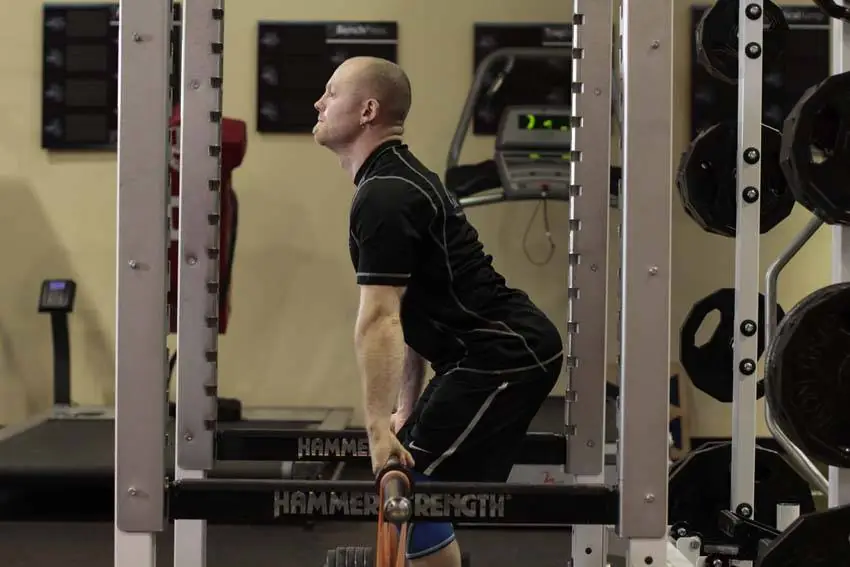
You set up a barbell on the pins of a power rack at your desired height — just below the knees, just above, or mid-thigh, depending on what you're trying to accomplish. The bands attach to the base of the rack or are anchored with dumbbells, and the other end connects to the bar. You may need to choke the bands to get the right amount of tension, which is a sentence that sounds vaguely illegal but is actually just smart training.
You position yourself against the bar in proper deadlift form — feet under hips, grip at shoulder width, back arched, hips pulled back to engage the hamstrings. With your head facing forward, you extend through your hips and knees, pulling the weight up and back until you're fully locked out, pulling your shoulders back at the top like you're trying to touch your shoulder blades together behind you. Return the weight to the pins and repeat. The bands add accommodating resistance that overloads the top of the movement, building lockout strength and explosive pulling power that'll make your conventional deadlift feel like it got an upgrade.